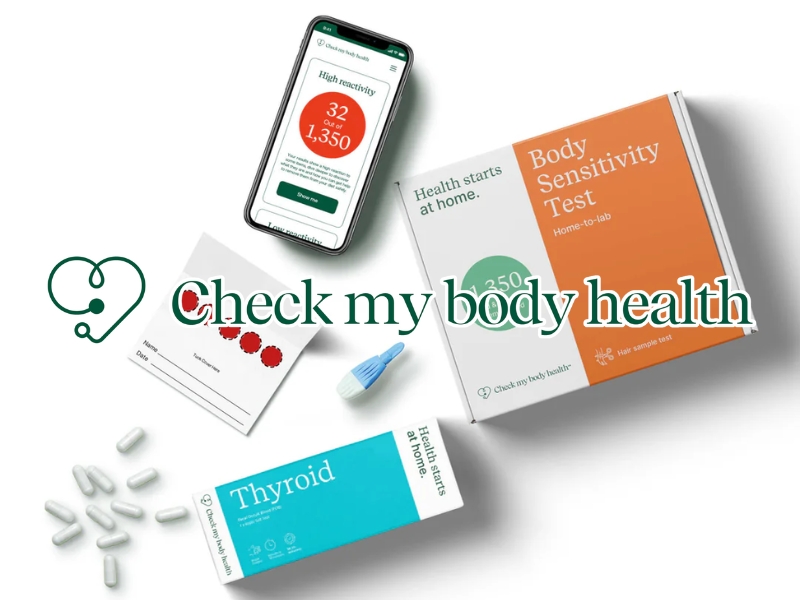
“🧬 Start the New Year with real answers: explore Check My Body Health's immune and allergy testing before seasonal challenges hit.”
January often brings a fresh look at daily habits, and immune health testing is one way to start the year with clearer information rather than guesswork. Check My Body Health offers at-home options that screen for autoimmune markers as well as food-related immune responses, giving people a concrete starting point before cold-and-flu season peaks. Instead of waiting for symptoms to worsen, a test kit delivered to the door can flag patterns worth discussing with a doctor.
The Autoantibody (ANA) Test from Check My Body Health is described as a clinical screening tool that checks whether the immune system may be attacking the body’s own cells. It is commonly used as an initial investigation when autoimmune conditions are suspected, though an autoimmune condition itself requires further medical follow-up. For anyone wondering about unexplained fatigue or joint discomfort, this type of immune health testing offers a documented starting point rather than speculation.
Because the test is positioned as a screening tool, it does not diagnose a specific condition on its own. It simply indicates whether antinuclear antibodies are present, which can then prompt a conversation with a healthcare provider. That distinction matters for anyone trying to interpret results responsibly.
Cold weather, indoor gatherings, and richer seasonal meals can all put pressure on the body at once. Many people associate the New Year with resolutions around diet and movement, but fewer think about checking how the immune system is actually functioning. Immune health testing fits naturally into that reset period, since it offers a factual baseline instead of relying on assumptions about energy levels or digestion.
Shorter days and disrupted routines can also make it harder to notice whether fatigue or bloating stems from diet, stress, or something immune-related. A test taken in January gives a reference point before spring allergy season or further seasonal shifts arrive. This is less about reacting to a single bad week and more about building a clearer long-term picture.

Check My Body Health’s Allergy & Intolerance Test combines IgE Allergy Testing and IgG Intolerance Testing in a single kit. IgE testing is described as detecting immediate immune responses to specific foods, while IgG testing looks at a different type of reaction. Combining both is meant to provide a more complete picture of how the body responds to various foods and drinks.
This dual approach distinguishes a sudden allergic-type reaction from a slower intolerance pattern, which can otherwise be hard to tell apart. For people managing recurring digestive discomfort, having both markers assessed together can be more informative than testing for only one. The brand’s product catalogue also lists narrower options, such as Basic, Advanced, and Premium Allergy Tests, alongside a Skin Allergy Test, for those wanting a more focused screen.
Beyond single tests, Check My Body Health lists an Elimination & Reintroduction Programme aimed at people who sense something is off but have not been able to connect the dots. According to the brand’s own description, it suits those who feel bloated, inflamed, or uncomfortable after eating, or who experience fatigue, headaches, or brain fog. The programme is framed as a longer-term approach rather than a single snapshot test.
Pairing a result from an allergy or intolerance test with a structured elimination phase allows a person to observe how removing and then reintroducing specific foods affects symptoms over time. This kind of structured observation can add context that a single lab result alone does not provide. It also gives a practical next step for anyone whose test results point toward several possible trigger foods.

Check My Body Health also sells a range of Wellness Strips, including Digestive + Gut Health Strips, Probiotic + Metabolism Strips, and Cognitive Relax Strips. These oral strips are positioned as a convenient, on-the-go format rather than a traditional capsule or tablet. The Digestive + Gut Health Strips, for example, are described as delivering a blend of probiotics and digestive enzymes to help maintain normal gut flora balance.
Someone who completes an allergy or intolerance test may look at these supplement formats as a way to support general wellness alongside dietary adjustments. The Probiotic + Metabolism Strips combine Bifidobacterium lactis with polydextrose, a prebiotic fiber intended to feed beneficial bacteria. None of these products are presented as a replacement for medical advice, but they sit within the same catalogue as the testing kits.
A single test result is most useful when it becomes part of an ongoing record rather than a one-off data point. Results from an Autoantibody Test or an Allergy & Intolerance Test can be revisited later, compared against new symptoms, or shared with a healthcare provider as circumstances change. Immune health testing taken early in the year can act as a reference marker for the months that follow.
Because Check My Body Health also lists general health categories such as Vitamins & Supplements and Diet & Nutrition resources, including eBooks and Nutritionist-led Programmes, a test result can feed into a broader set of choices. For example, someone with confirmed sensitivities might explore the Meal Planning Service to adjust daily eating patterns. None of these steps require guesswork once a documented result is on hand.
Approaching the New Year with a documented understanding of immune and dietary responses offers a steadier foundation than relying on assumptions alone.