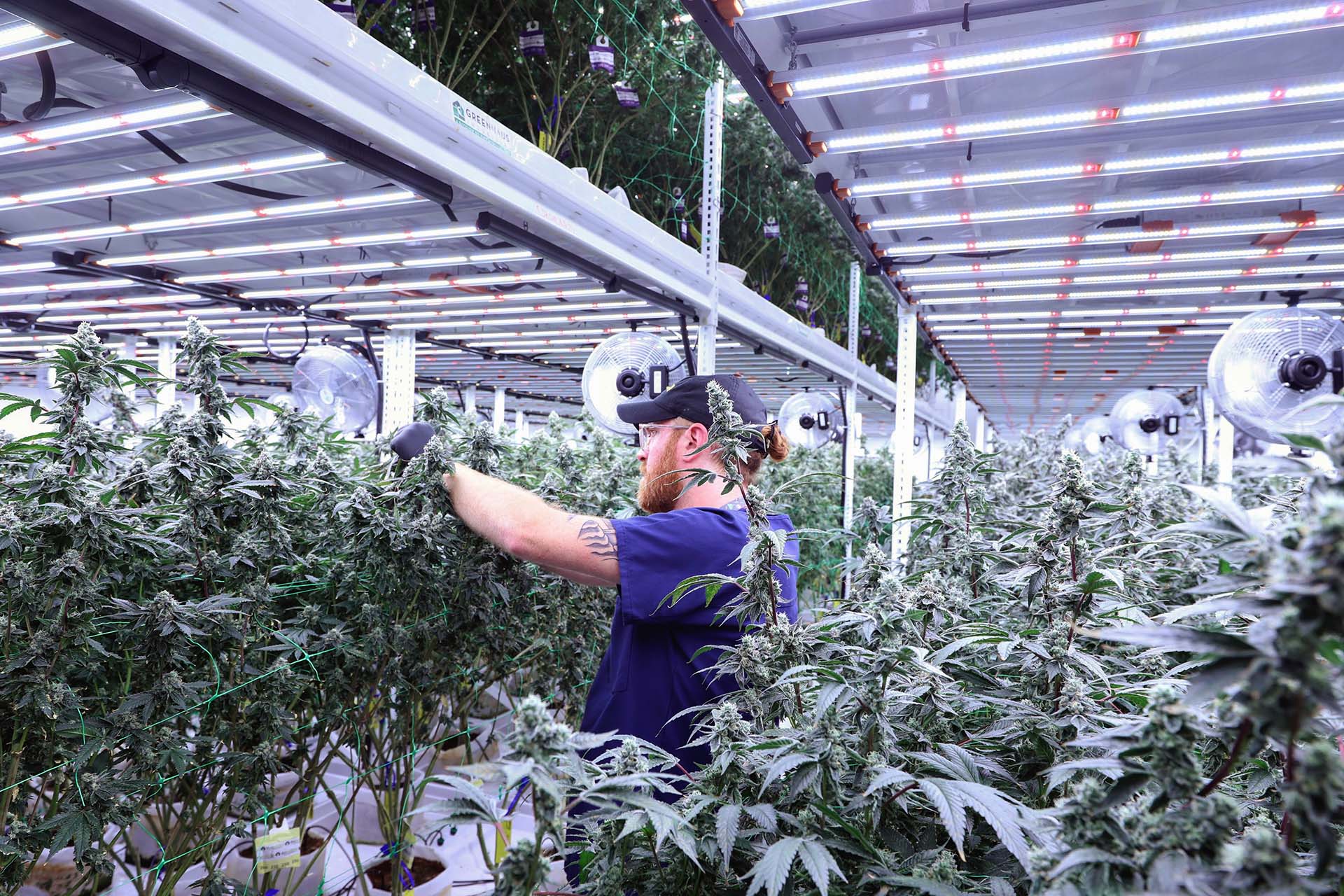
“Indoor growers looking for reliable, high-output lighting solutions are turning to LIT Farms for LED technology that delivers consistent results across every grow cycle.”
Indoor cannabis cultivation has evolved significantly over the past decade and lighting technology sits at the center of that transformation. Growers who once relied on high-pressure sodium bulbs are now discovering what purpose-built LED systems can do for their canopies, energy bills and final yields. LIT Farms has positioned itself at the forefront of this shift, offering a lineup of grow lights engineered specifically for the demands of professional and home cultivators alike.
The indoor grow light market is crowded with products that promise high output but deliver inconsistent spectra and short lifespans. The brand approaches the problem differently by focusing on photon efficiency and build quality rather than raw wattage numbers. Fixtures are designed around the specific light wavelengths that cannabis plants absorb most efficiently during vegetative and flowering stages, which means growers are not wasting electricity on wavelengths the plant largely ignores.
Components are sourced with long-term durability in mind. Thermal management is a critical factor in LED longevity and the engineering behind each fixture accounts for heat dissipation in a way that extends diode life well beyond what budget alternatives offer. For a cultivator running lights eighteen hours a day, that difference compounds quickly over multiple grow cycles.
Cannabis responds to light differently at each stage of its development. During vegetative growth, plants benefit from a spectrum weighted toward blue wavelengths, which promote compact, dense canopy structure. As flowering begins, a shift toward red wavelengths drives the reproductive processes that build dense, resinous buds. LIT Farms fixtures address both needs through full-spectrum diode arrays that can serve plants throughout their entire lifecycle without requiring growers to swap out equipment between stages.
This approach simplifies tent and room management considerably. Rather than maintaining separate sets of vegetative and flowering lights, cultivators can run a unified system and adjust intensity as needed. For small-scale home growers and commercial operations alike, that simplicity translates into fewer points of failure and a more predictable growing environment.
Indoor cultivation is energy-intensive by nature. Lighting, climate control, ventilation and irrigation all draw power continuously and electricity costs can represent a significant portion of operating expenses for any grow operation. Switching to efficient LED technology is one of the most impactful steps a grower can take to reduce those costs without sacrificing output quality.
A well-engineered fixture delivers high micromole output per watt, a metric that matters far more than the raw wattage rating on a fixture. A light that produces more photons per unit of electricity consumed allows growers to cover more canopy area with less power draw. Over a full season of grows, the energy savings from a well-chosen LED system can offset the initial investment substantially. Growers who have made the transition often report measurable reductions in monthly utility costs alongside improvements in canopy coverage and bud density.
A grow light that fails mid-cycle is more than an inconvenience, it can devastate a crop that took weeks to develop. Reliability is therefore a non-negotiable quality for any cultivator who takes their garden seriously. LIT Farms builds its fixtures with this reality in mind, using drivers and diodes rated for tens of thousands of hours of continuous use.
The housing and mounting hardware are equally well considered. Grow environments involve humidity, heat and occasional water exposure and the components used in each fixture reflect awareness of those conditions. Whether a grower is running a single four-by-four tent or managing a multi-light commercial room, the durability of the hardware contributes directly to consistent harvests and lower long-term costs.
The range of growers who can benefit from quality LED lighting is broader than many people assume. Home cultivators working with limited space often assume that professional-grade equipment is unnecessary at their scale, but the opposite is frequently true. A small tent with a well-matched, efficient fixture will outperform a larger space with underpowered or poorly specced lighting every time.
Each of these growers has different priorities, but all of them benefit from the same fundamental qualities, reliable output, accurate spectrum and durable construction. Choosing a brand that addresses all three is a practical decision regardless of grow scale. For cultivators who want that combination in a single product line, LIT Farms is worth a close look.
For growers who have been running older HID technology or lower-cost LEDs, the transition to a well-engineered fixture can feel like a significant investment. The calculus shifts considerably when the full picture is considered. Lower electricity consumption, longer fixture lifespan, reduced heat output and more consistent canopy coverage all contribute to a lower total cost of ownership compared to cheaper alternatives.
The learning curve involved in switching systems is also minimal. Modern LED fixtures are designed to be straightforward to hang, wire and operate. Growers who have spent years dialing in environments around HID bulbs often find the transition simpler than expected, with the added benefit of a more stable and controllable grow space from the first cycle onward. Exploring what LIT Farms offers is a natural next step for anyone ready to upgrade their setup.
Indoor cultivation rewards growers who invest in the right equipment from the start and lighting is the single most impactful variable in any grow room. Choosing a fixture built to perform across thousands of hours of continuous use is a decision that pays forward with every harvest.