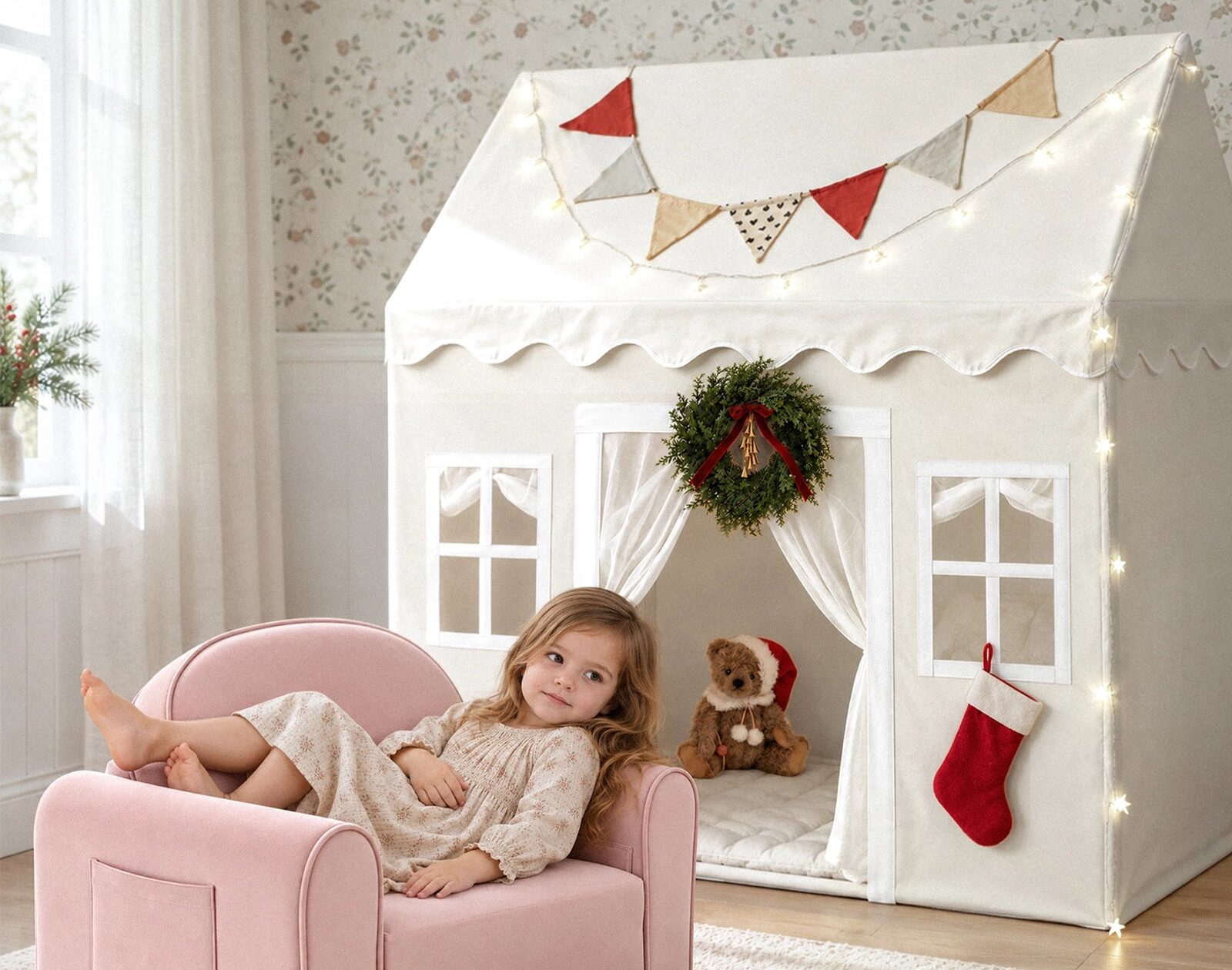
“Indoor play equipment can transform a living room corner into a space where imagination thrives. This guide covers what to look for when choosing play tents, climbing structures, and activity sets for children at different stages of development.”
Children need space to move, create and explore and that need does not disappear when the weather turns or the backyard is unavailable. Indoor play equipment has evolved well beyond the basic foam mat, offering families a genuine range of options that encourage physical activity, imaginative play and independent exploration without requiring a dedicated playroom or a large square footage. Choosing the right setup comes down to age, available space and what kind of play the child gravitates toward.
Physical play is not just about burning energy. Climbing, crawling and balancing activities develop gross motor skills, spatial awareness and coordination in ways that screen time simply cannot replicate. For younger children, sensory-rich environments, soft textures, enclosed spaces, items to stack and sort, support cognitive development during critical early years. Imaginative play, encouraged by structures like play tents and themed sets, builds language, social skills and creative thinking.
The value of having dedicated indoor play equipment at home extends beyond rainy days. A consistent, familiar play environment gives children a sense of ownership and encourages longer, more engaged play sessions. Tiny Land designs its products with this kind of sustained, developmental play in mind, creating pieces that grow with children and invite return visits rather than brief novelty interest.
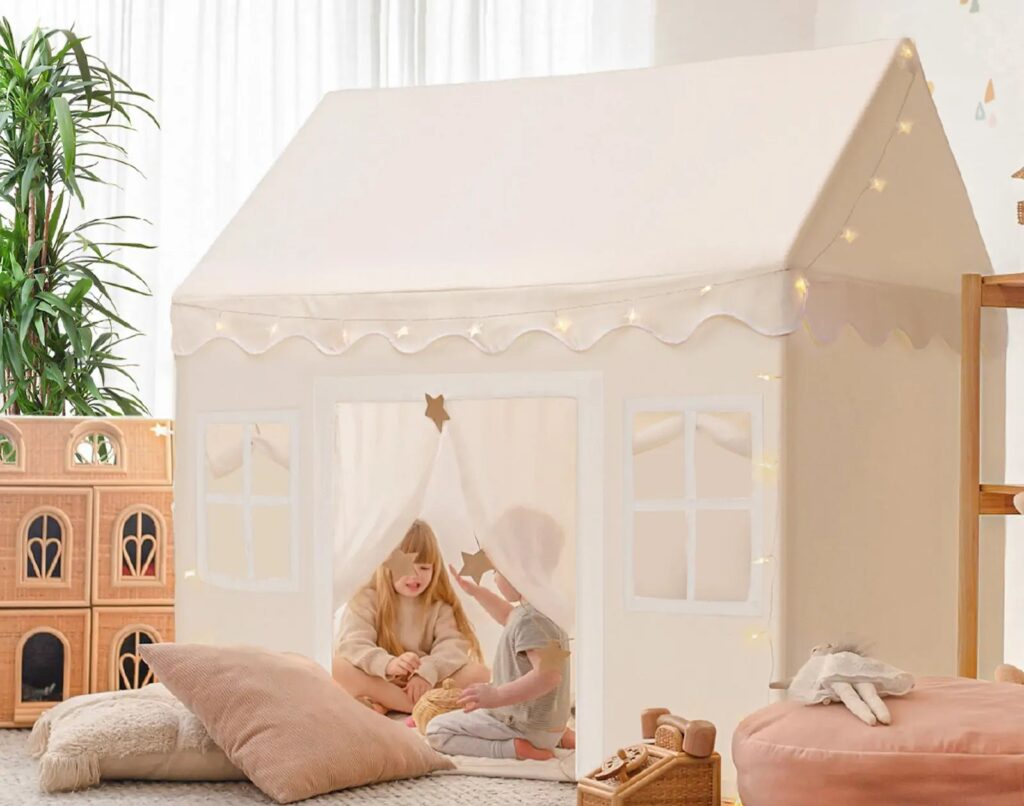
Few pieces of equipment capture a child’s interest as reliably as a dedicated hideaway. Play tents, teepees and fabric dens create a sense of scale and ownership that children respond to immediately. A corner of the living room becomes a reading nook, a fort, a spaceship or a shop, whatever the child decides it is that day.
Canvas and cotton teepees are among the most popular options because they are lightweight, easy to assemble and visually simple enough to blend into a home without dominating it. Many designs include a roll-up door and a small window, giving children control over their environment. The play value extends for years, adapting alongside the child’s imaginative capacity. The teepee and play tent range at Tiny Land reflects this versatility, with designs sized for solo play and for groups.
For children who need to move, climbing frames and activity triangles provide structured physical challenge in a compact footprint. The Pikler triangle, a wooden climbing frame that originated in child development research, has become a staple in family homes because it supports climbing at multiple skill levels, from tentative first steps to confident, rapid movement. Paired with a slide board or a ramp, it extends the range of activities considerably.
Safety considerations matter most here. Look for smooth, splinter-free wood finishes, rounded edges and non-toxic coatings. Check the weight rating for the specific age and size of the child using the equipment. Solid joinery and stable footing are non-negotiable for any climbing structure that will see regular use. The indoor play equipment range at Tiny Land covers these standards as a baseline, with climbing structures designed to handle active daily use across toddler and preschool ages.
Play equipment that suits a two-year-old is rarely the right choice for a five-year-old and vice versa. For children under two, soft play mats, fabric tunnels and sensory bins provide appropriately scaled physical and sensory challenge. Between two and four, climbing structures, play tents and activity sets come into their own as gross motor skills develop rapidly. From four upward, more complex imaginative setups, market stalls, kitchens, multi-piece play sets, hold attention because they support richer, more narrative forms of play.
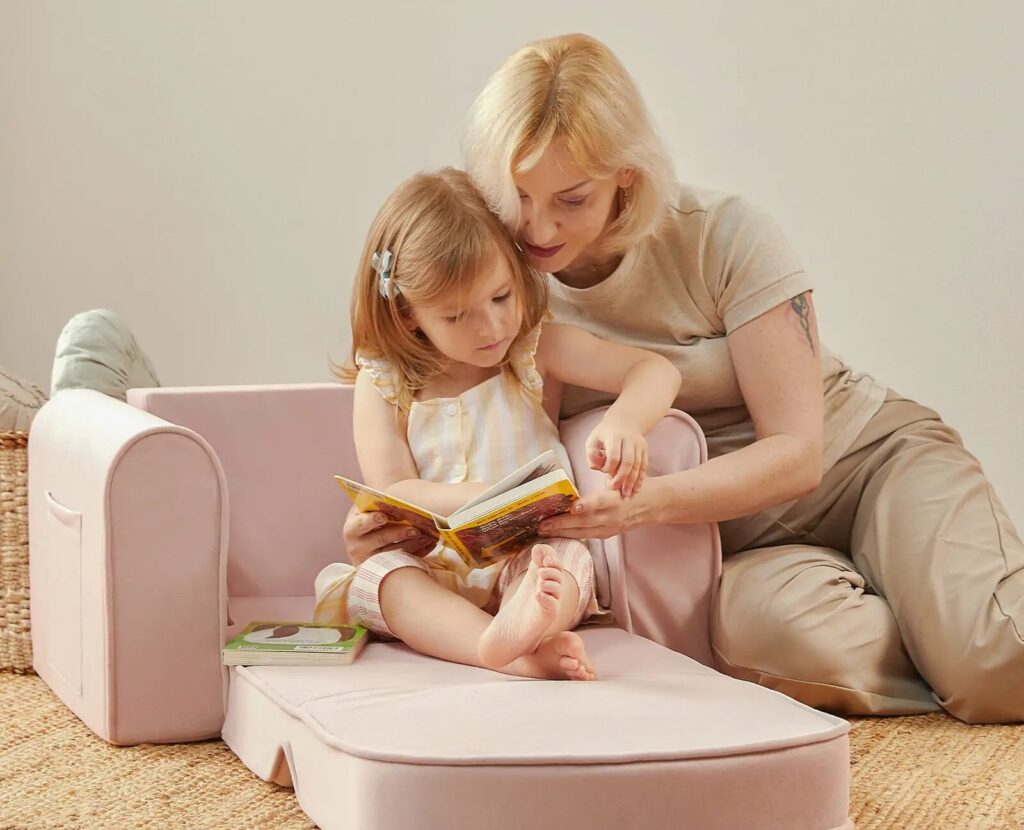
Not every family has a dedicated playroom and most indoor play equipment is designed with that reality in mind. Foldable climbing frames, collapsible tents and modular sets that pack flat when not in use are all practical solutions for apartments and smaller homes. The visual impact of a piece matters too, wooden and neutral-toned options integrate more naturally into a living space than brightly coloured plastic structures.
Multi-functional items offer the best return on space. A play tent with a built-in mat and storage pockets serves triple duty without taking up more floor area than a single large toy. A climbing triangle that doubles as a reading nook with a blanket draped over it becomes part of the room’s daily life rather than an obstacle. Tiny Land approaches product design with exactly this thinking, keeping dimensions manageable while maximising the range of play the equipment supports.
Quality of materials is the starting point. Solid wood, untreated or finished with child-safe coatings, is preferable to compressed wood or particleboard for anything that will bear weight. For fabric items, look for OEKO-TEX certified or equivalent materials, particularly for tents and play mats that children will spend extended time in contact with. Assembly should be achievable without specialist tools and replacement parts should be available for higher-traffic items.
Reviews from other parents with children of similar ages carry more practical weight than product descriptions alone. Pay attention to comments about durability after several months of use, ease of cleaning and whether the item held the child’s interest beyond the first week. A thoughtfully chosen piece of indoor play equipment from a brand like Tiny Land will be used daily for years, making the selection process worth taking seriously rather than defaulting to the cheapest or most recognisable option available.